A rider was injured while traveling on an electric scooter in a bicycle lane after encountering a depressed utility valve cover within the roadway. The incident resulted in a claim against a roadway maintenance contractor that had previously performed chip seal work on the street.
The claim alleged that the contractor should have corrected or otherwise addressed the utility cover and that its roadway maintenance activities created or contributed to the hazardous condition. The defense retained Knott Laboratory to evaluate the roadway conditions, review project documentation, assess contractor responsibilities/limitations, and address the opinions offered by the plaintiff’s engineering expert.
Our Investigation
Knott conducted a comprehensive forensic engineering investigation that included reviewing contract documents, roadway maintenance records, repair records, deposition testimony, engineering reports, and applicable standards. We also performed a detailed field inspection of the incident location and surrounding area. To better understand the conditions encountered by the rider, our engineer traveled the same route described during testimony using a scooter similar to the one involved in the incident. Our inspection extended beyond the incident location to include nearby bicycle lanes and streets throughout the area.
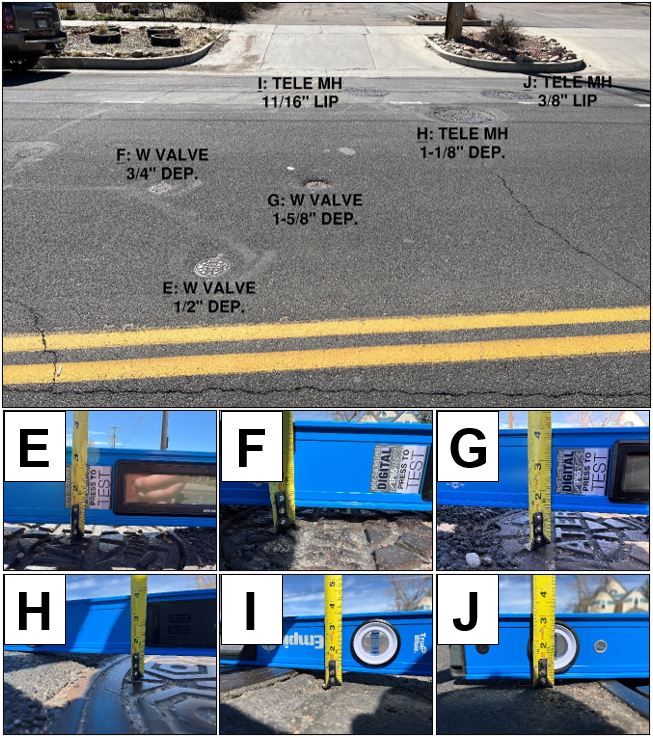
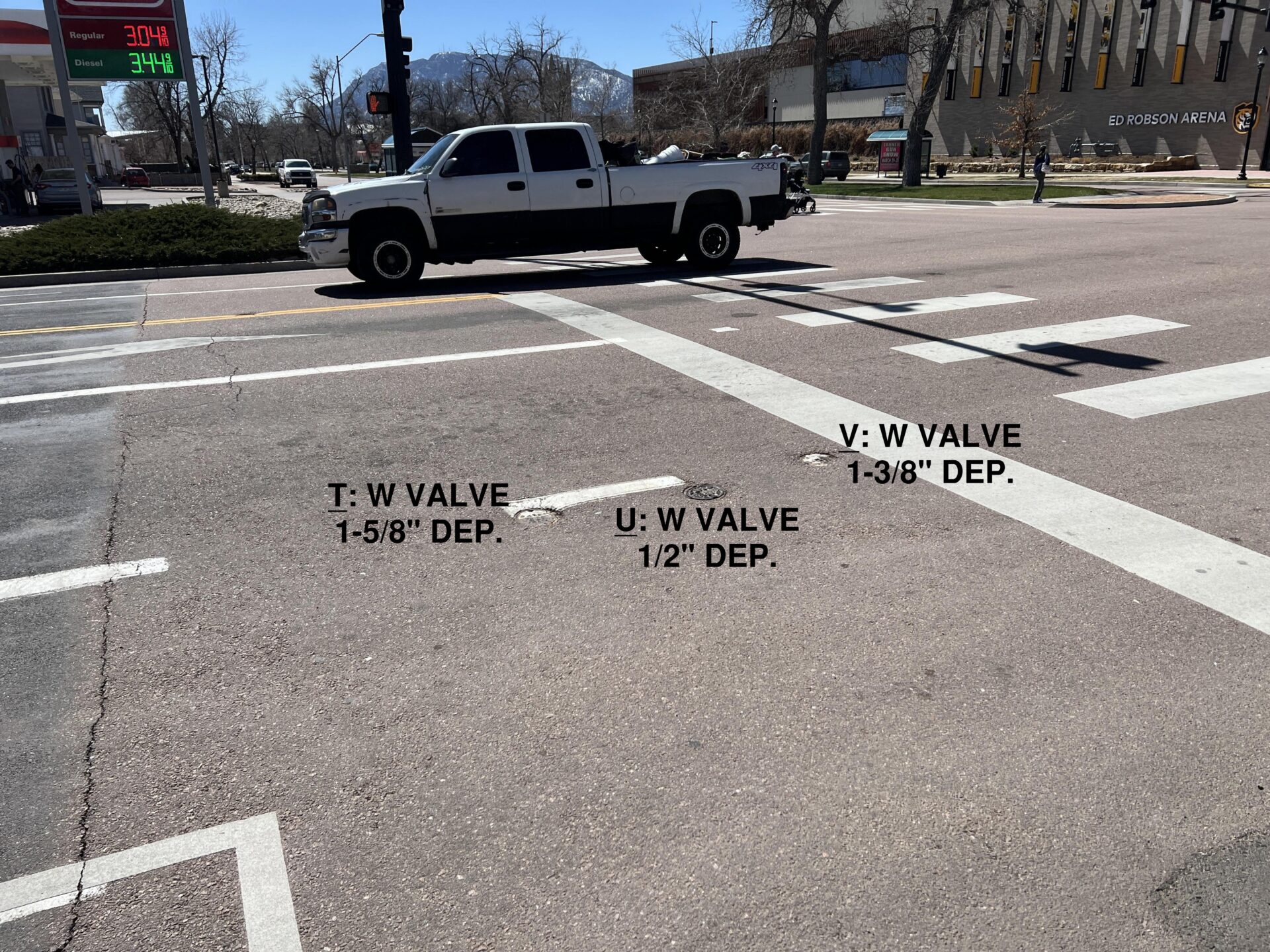
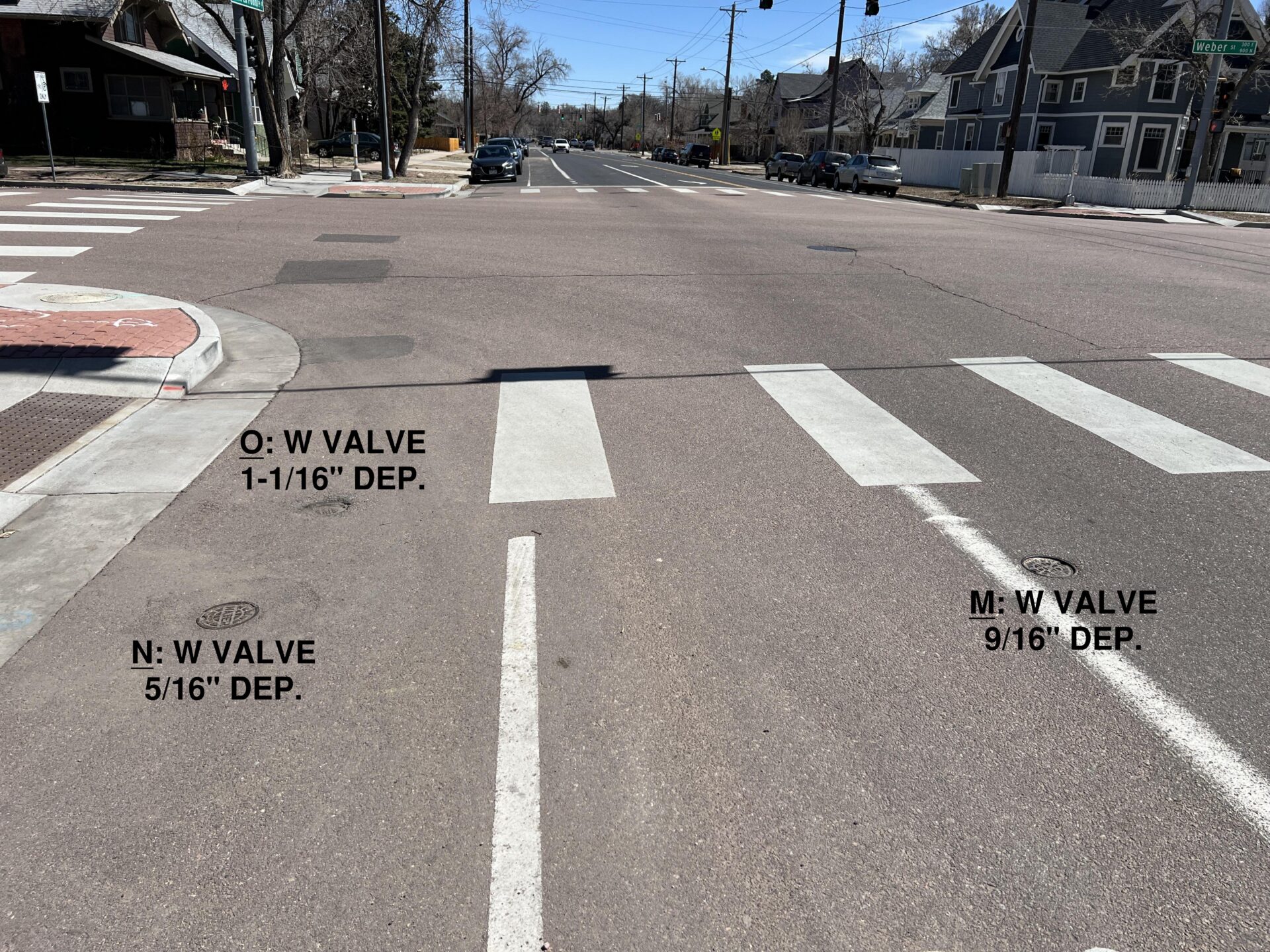
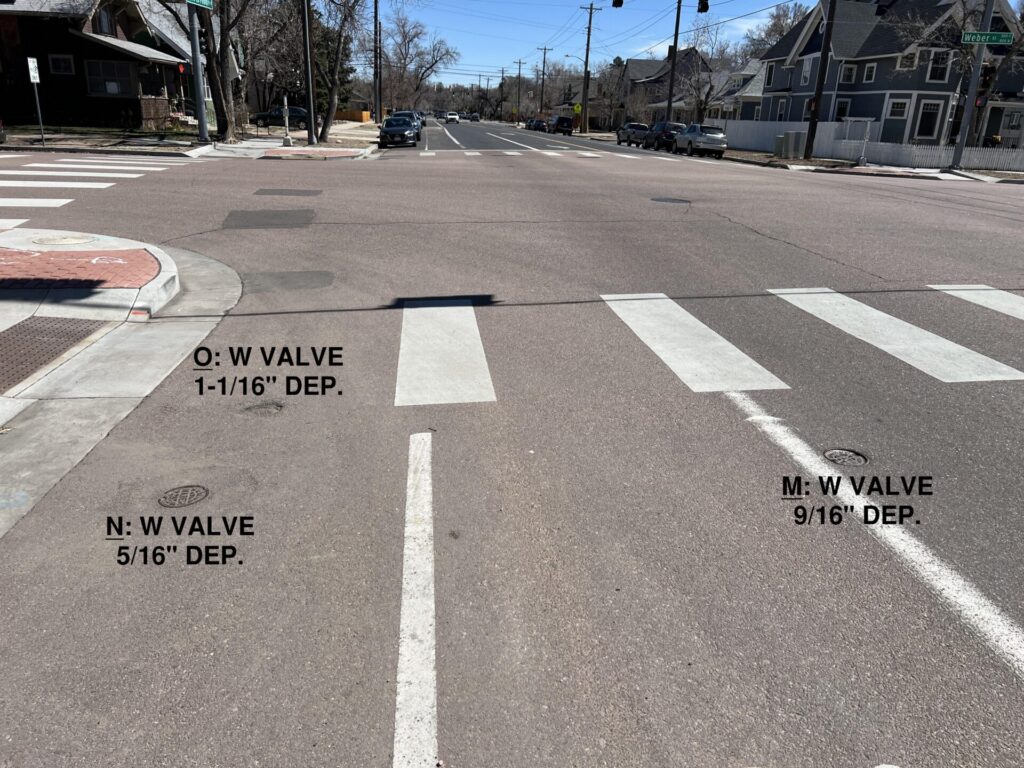
During this work, we documented roadway conditions, measured surface irregularities, and evaluated the prevalence of depressed utility covers, potholes, and other elevation changes within bicycle lanes.
What We Found
Our investigation revealed that the utility cover involved in the incident was not unique. Along the subject roadway segment alone, multiple utility covers exhibited similar elevation differences relative to the surrounding pavement. Furthermore, field observations showed that depressed utility covers and other variations in roadway elevation were widespread throughout the surrounding street network, including locations where the contractor had never performed work.
Knott also established that the condition of the utility cover predated the contractor’s maintenance activities. Historical imagery and project records indicated that the utility cover had been depressed relative to the roadway surface long before the contractor performed chip seal operations.
Equally important, the roadway treatment performed by the contractor was determined to be chip sealing rather than paving or roadway reconstruction. The maintenance process did not materially alter the geometry of the roadway and did not create the underlying depression associated with the utility cover.
Evaluating Contractor Responsibility
A key question in the case was whether the contractor had a duty to adjust, raise, or otherwise modify the utility structure in order to make it flush with the surrounding asphalt pavement and eliminate the depression and associated hazards.
Knott’s review of the project contract showed that the contractor’s scope of work did not require the adjustment of the utility cover involved in the incident. In fact, contract provisions specifically addressed how utility structures were to be treated during chip seal operations and did not authorize the contractor to perform changes to the covers.
We further found that the contractor completed its contractual obligations and that the municipality inspected and accepted the completed work. Project records included signed completion documentation indicating that the work had been reviewed and approved without identifying deficiencies requiring corrective action.
Rebutting the Opposing Opinions
Knott was also asked to evaluate engineering opinions offered on behalf of the plaintiff.
Our analysis identified several issues with those opinions, including changing theories regarding the cause of the incident and assumptions regarding contractor responsibilities that were not supported by the project contract or roadway maintenance documentation.
We also reviewed engineering standards and guidance documents cited in support of the plaintiff’s position. Knott determined that several of the referenced standards were not applicable to the contractor’s scope of work or to the roadway maintenance activities performed as part of the project.
In addition, our review identified instances where conclusions were presented without supporting calculations, analyses, or technical documentation that would allow the underlying opinions to be independently evaluated.
The Outcome
Our investigation provided the defense with engineering evidence showing that:
- The roadway condition existed before the contractor’s work.
- The contractor did not create the depressed utility cover.
- The contractor was not contractually responsible for adjusting or reconstructing the utility structure.
- Similar roadway conditions were common throughout the area and were not unique to the project.
- The contractor completed its work in accordance with the contract and received municipal acceptance of the completed project.
By combining forensic engineering analysis, field investigation, contract review, and technical rebuttal of opposing opinions, Knott helped the defense clearly distinguish between pre-existing roadway conditions and the contractor’s actual scope of responsibility.