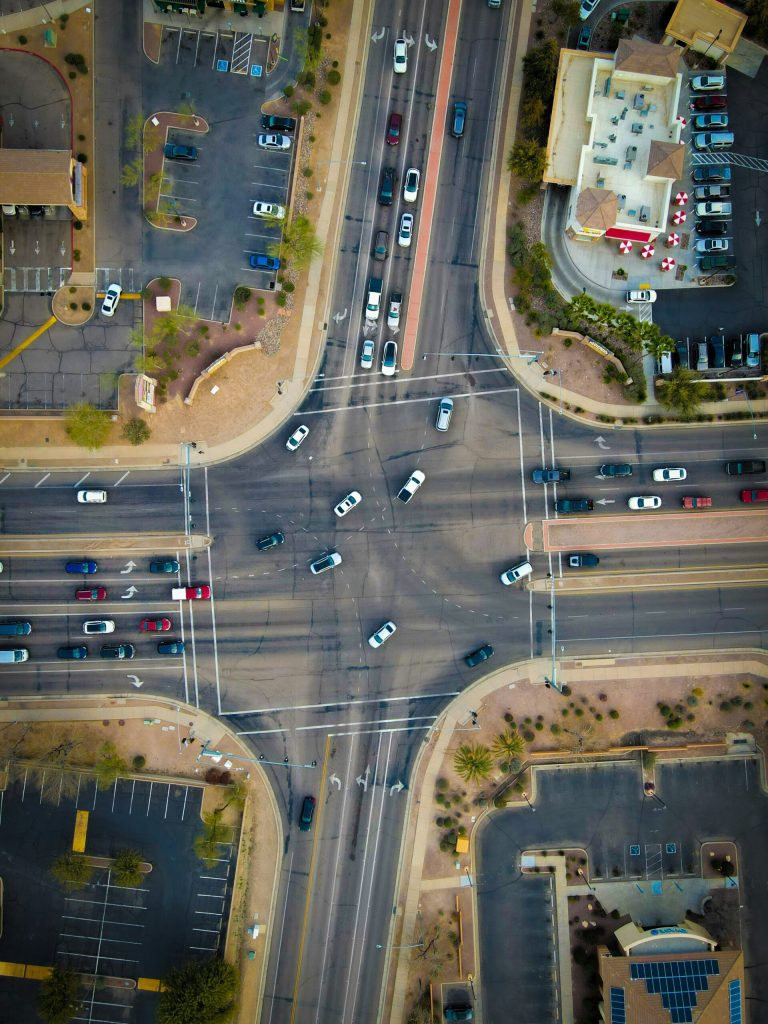
In traffic light systems, sequencing refers to the order in which different movements are given the right of way (like through traffic or left turns). Phase timing is the specific duration allocated to each movement’s phase within the overall traffic light cycle. Traffic lights are programmed to operate differently during different times of day and different days of the week for the changing flow of traffic.
Since these systems are dynamic, an accident reconstructionist should not assume that sequences and phases observed during an inspection were the same at the time of the incident being investigated.
That’s where Automated Traffic Signal Performance Measures (ATSPM) come in. An ATSPM system collects and stores high-resolution data from traffic signal controllers, and in some states, this data is available. The data is anonymous in that it doesn’t capture vehicle information, but is a powerful resource used in conjunction with other evidence such as witness statements, driver statements, and physical evidence from the scene.
 Historical data can tell you:
- which phase was active at the time of the incident
- phase duration
- stop-bar detections
- pedestrian activations (can extend phase duration to allow safe passage across the intersection)
- advance timing (a system that adjusts traffic signal timing in real-time based on actual traffic conditions)
Light Timing Analysis is a powerful area of expertise that gives an accident reconstructionist a clearer picture of what took place during an incident at an intersection. It can change a “he said/she said” situation into a more identifiable and evidence-based conclusion of who entered the intersection unlawfully.
Featured Expert
Matt Masock is a former law enforcement officer with the Unified Police Department and the Salt Lake County Sheriff’s Office. He managed a multi-agency investigation team that dispatched to major collisions involving serious bodily injury or death. He also assisted other local agencies in the Salt Lake region with training and instruction in the mathematical analysis of collision dynamics.
He specializes in complete reconstruction of collisions, light timing, time distance analysis, pre and post speed analysis, CDR data collection and analysis, impairment, human factors, energy from crush, case screening, court preparation and presentation.