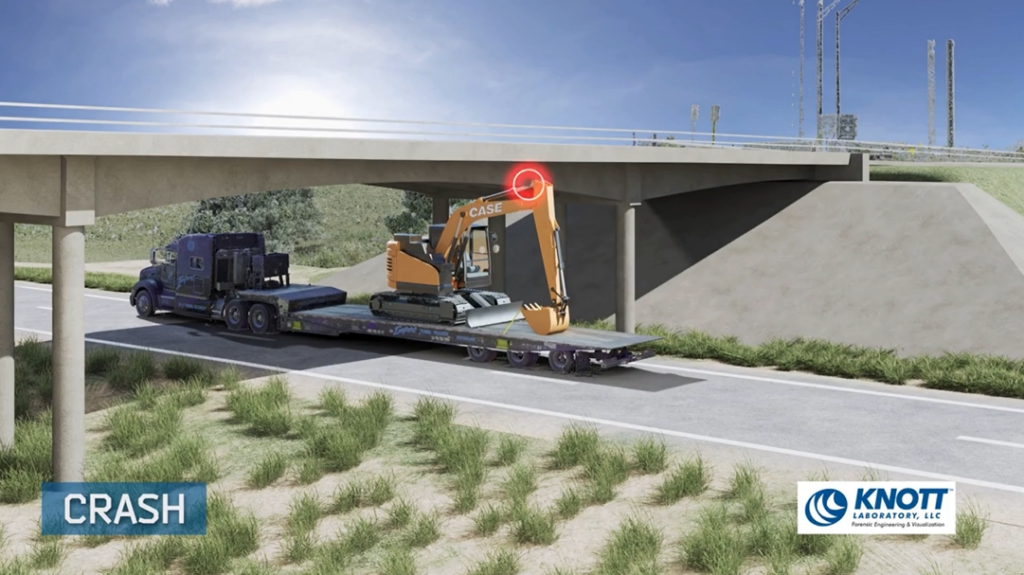
A heavy excavator was being transported on a flat bed trailer along an interstate when it struck an overpass. The collision showered broken chunks of concrete onto the interstate, striking and killing the driver of a car following the trailer.
Evidence in the case indicated that, in its loaded configuration, the excavator exceeded the Colorado state height limit. The equipment itself was not known to have any mechanical defects before the incident.
The collision raised questions about how the excavator had been configured for transport, including the position of its boom and bucket, its overall loaded height, and whether the equipment had been properly prepared and secured before traveling on the highway.
The Question
At the center of the investigation was a relatively straightforward question with important implications: Why did the excavator strike the bridge?
The excavator’s operating manual included guidance for transportation, including checking the machine’s total weight, length, width and height, reviewing roadway restrictions, and measuring from the ground to the highest point of the machine before transport. Testimony also established that the excavator should have cleared the bridge if it had been configured properly for transportation.
Understanding the incident therefore required looking beyond the collision itself and examining the physical relationship between the excavator, trailer, roadway and bridge height, as well as how changes in the excavator’s bum/bucket configuration affected its overall transportation height.
Our Process
We combined engineering analysis with visualization to help make the physical circumstances surrounding the collision understandable.
The engineering investigation began with a thorough site inspection, capturing evidence before the scene was changed or repaired. Our team also inspected and documented the excavator, truck, and trailer.
Analysis focused on the equipment and transportation regulations relevant to the incident, including the excavator’s dimensions and excavator bum/bucket configuration, its position on the trailer, and the clearance necessary to safely pass beneath the bridge.
The Outcome
Our Forensic Visualization team translated those technical questions to a series of visual images easier to understand. By illustrating the relationship between the excavator, trailer, overpass, and roadway, the analysis showed how the excavator’s configuration affected its overall height and helped explain the mechanics of the bridge strike.
The visualization below shows three scenarios:
- Crash 1 – The bucket is resting on the trailer
- Crash 2 – The bucket is elevated
We provided both views because it was possible that the excavator was loaded with the bum in either position. Analysis found that either position would still have resulted in the collision.
- Hypothetical
This version shows the excavator in the proper loading position and that it would have cleared the overpass.
Together, the engineering and visualization work provided a clearer picture of how the collision occurred and the factors that contributed to the excavator’s height at the time of the incident. The jury in this case issued the largest truck crash injury verdict in Colorado history.