Irving, Texas | Construction Defect Investigation
Project Overview
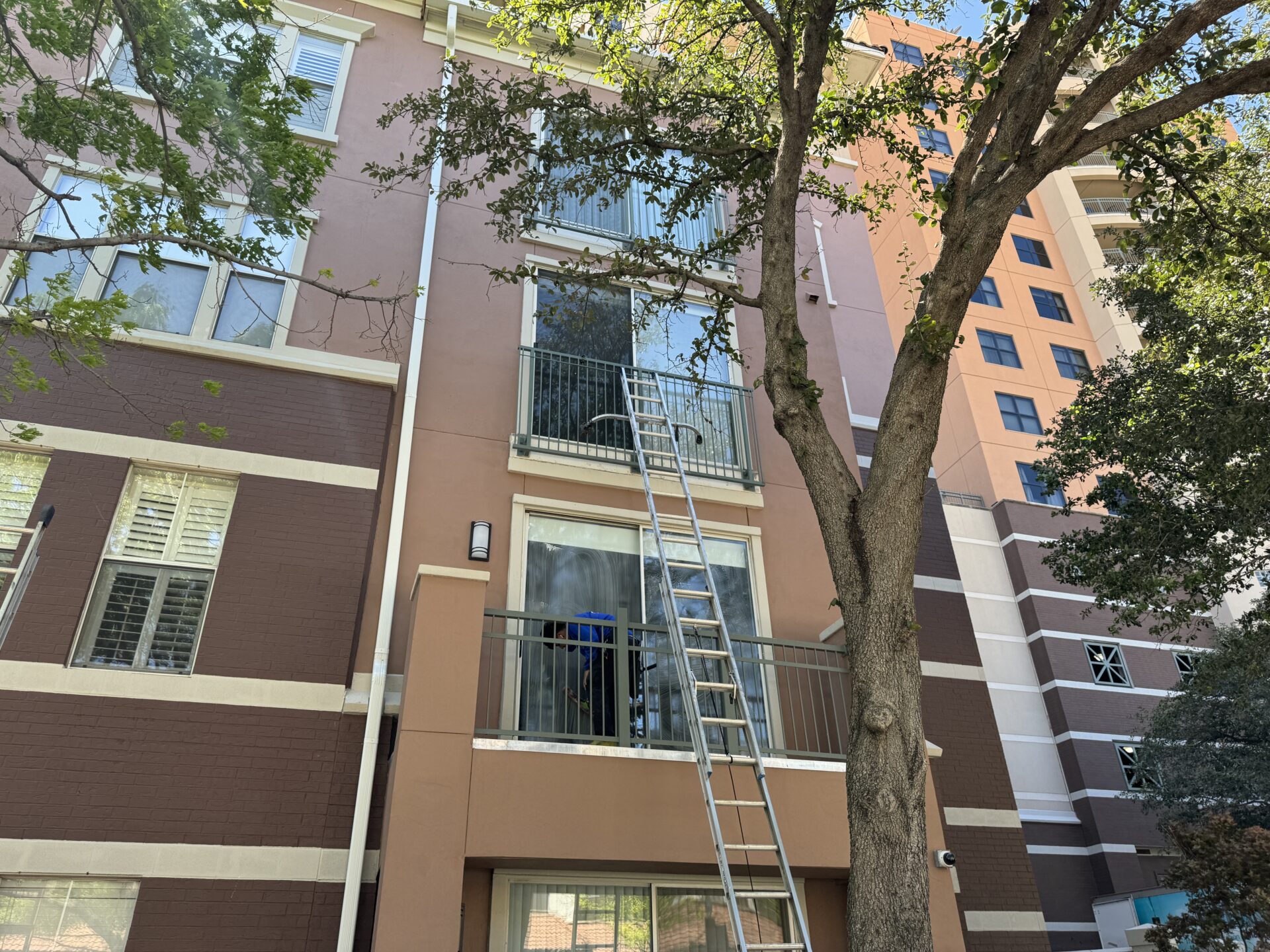
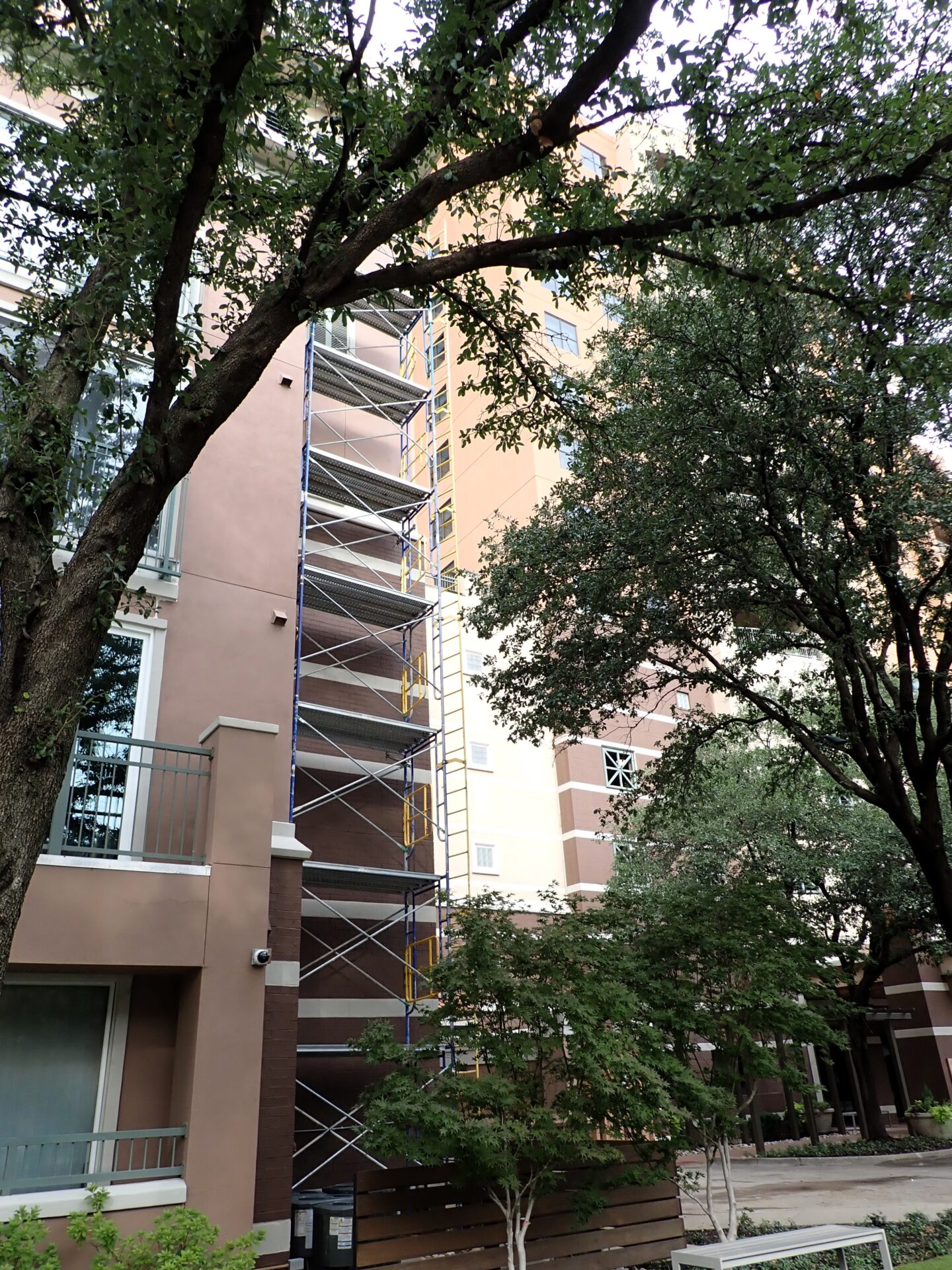
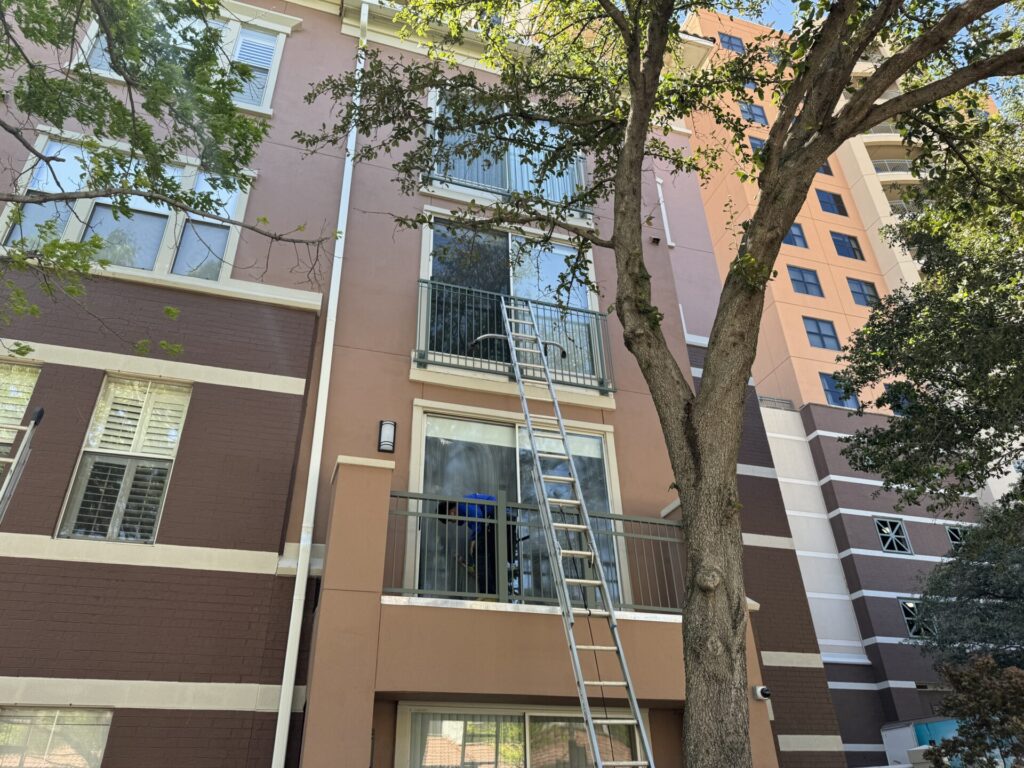
This multifamily community consists of a central high-rise tower surrounded by wood framed, mid-rise condominium buildings with balconies and exterior cladding systems. Knott Laboratory was retained by the condo HOA to investigate concerns related to the performance of prior façade and balcony repairs, including reports of water intrusion and interior damage following restoration work completed only a few years earlier.
Knott’s scope focused on evaluating whether the repaired building envelope and balcony assemblies were constructed in compliance with applicable building codes, industry standards, and project details.
The Challenge
Following completion of prior façade and balcony restoration work, unit owners and the association reported ongoing concerns related to water intrusion and interior damage. These concerns raised questions about the effectiveness of the repairs and whether concealed conditions within the wall and balcony assemblies were contributing to continued moisture exposure.
Because many potential defects were not visible from the exterior, a comprehensive evaluation required more than visual observations alone.
Knott Laboratory’s Approach
Knott Laboratory performed multiple site visits that included:
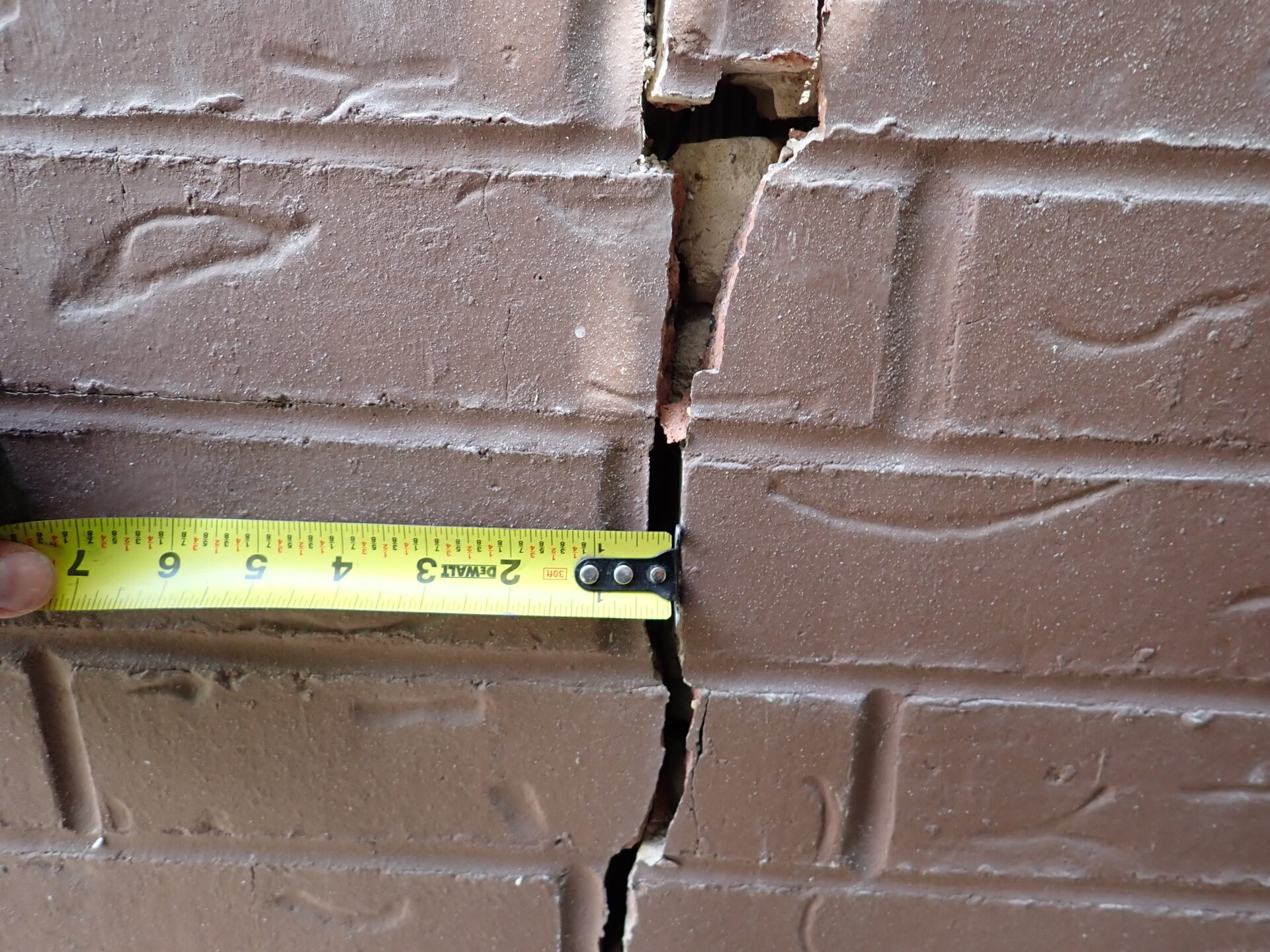
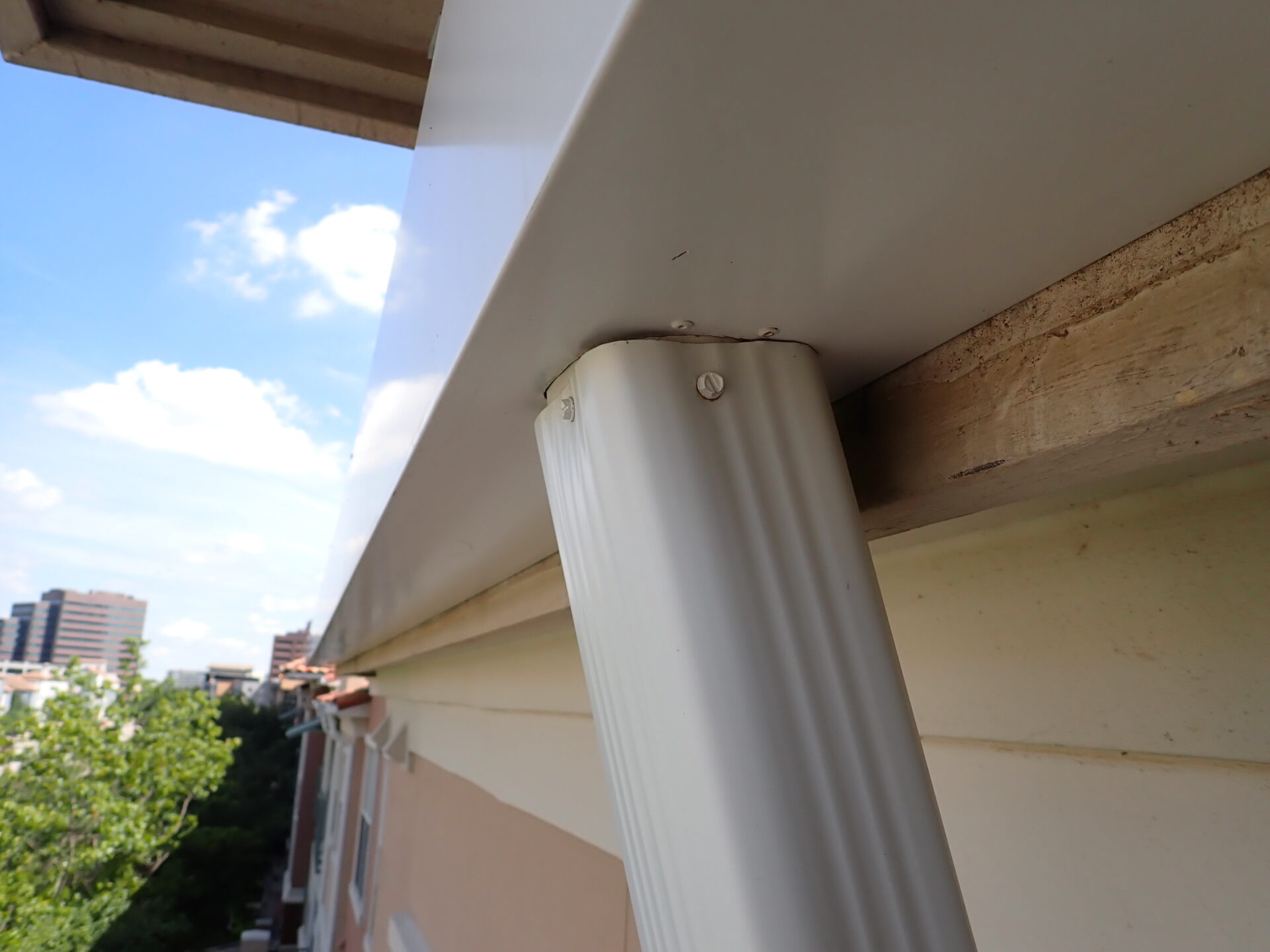
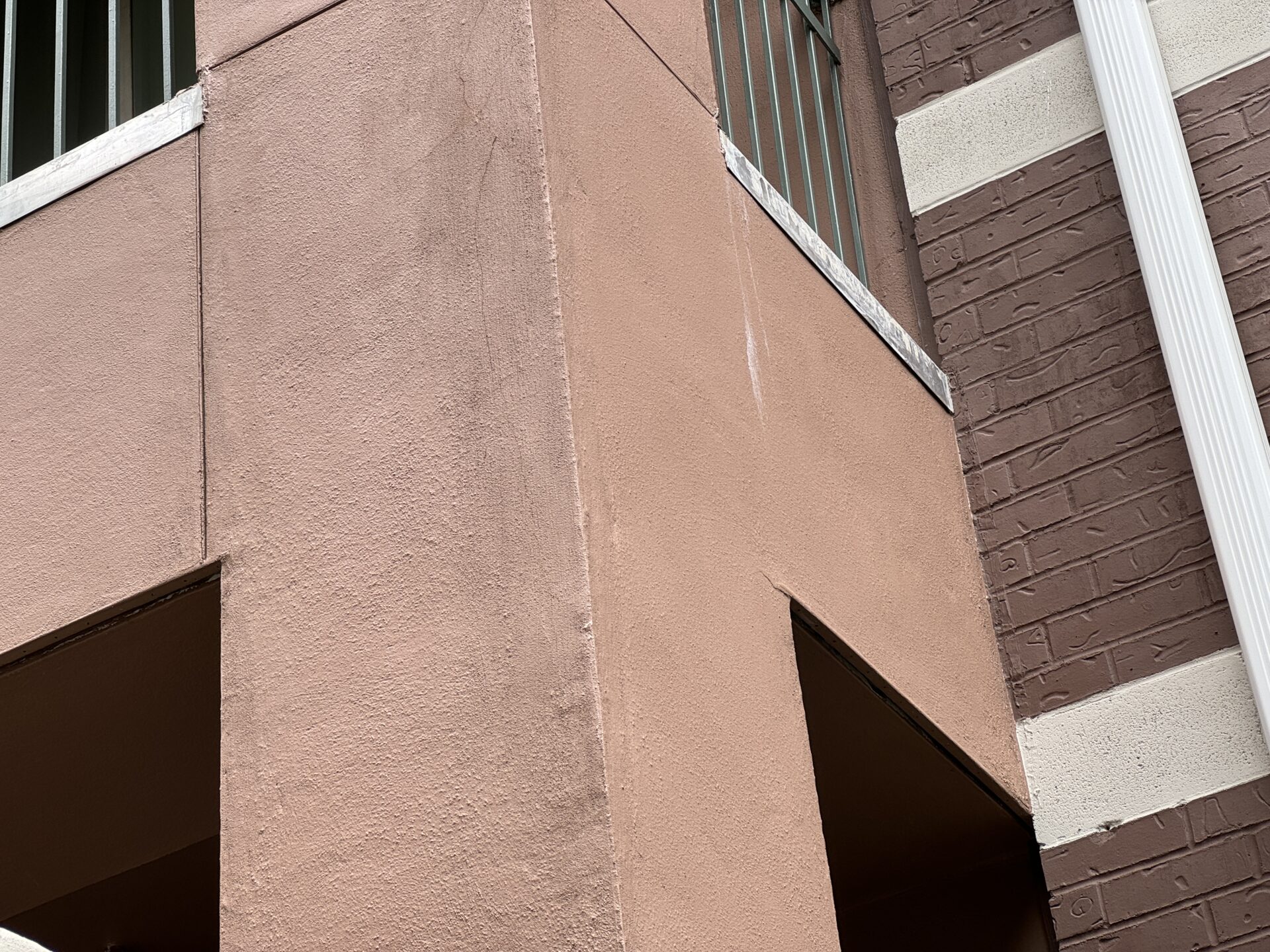
- Exterior observations of stucco, brick veneer, balconies, and transitions
- Interior observations of select residential units
- Water testing at building envelope interfaces
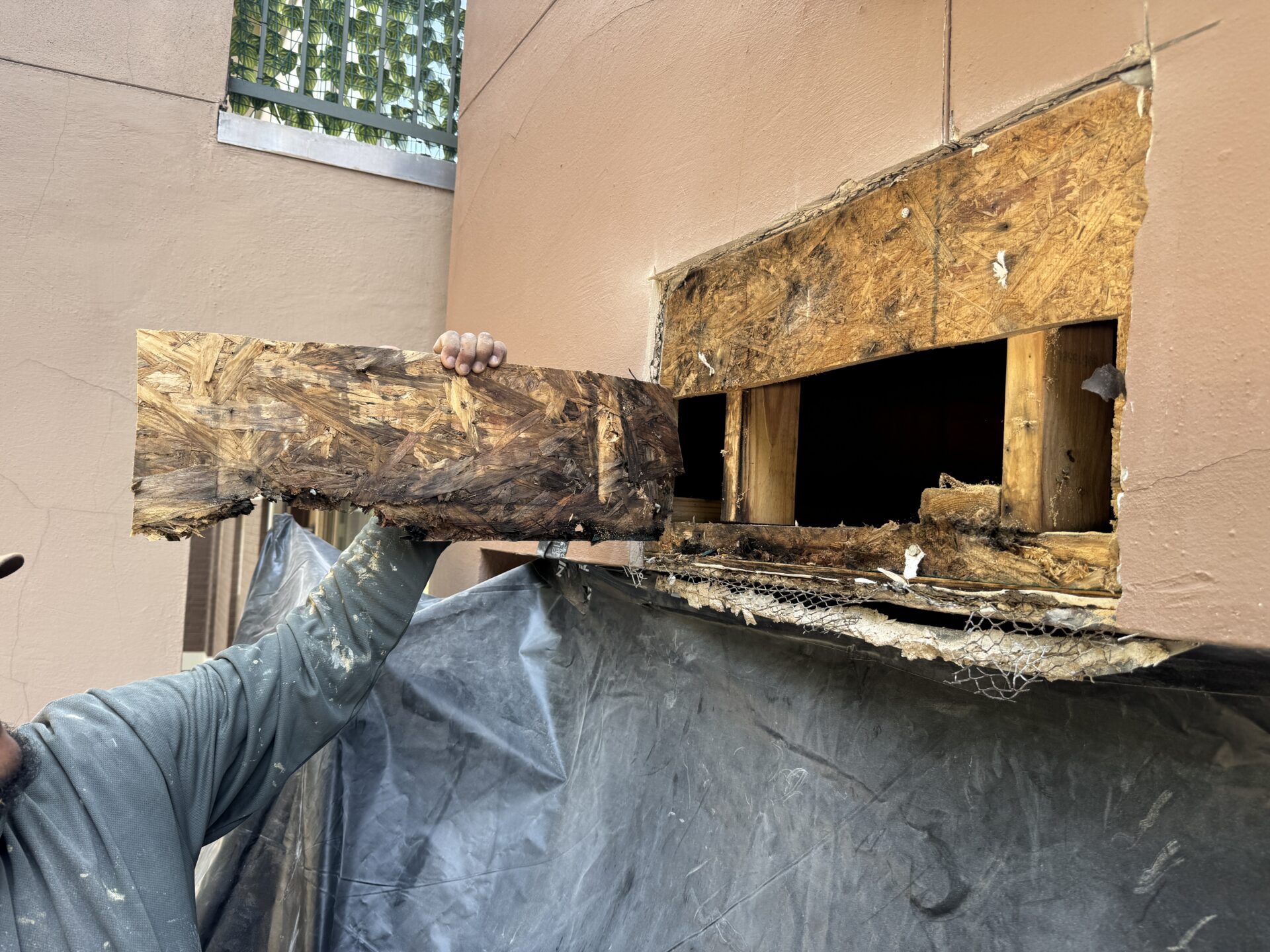
- Destructive (intrusive) testing to expose concealed conditions
- Review of available construction documents and construction administration records
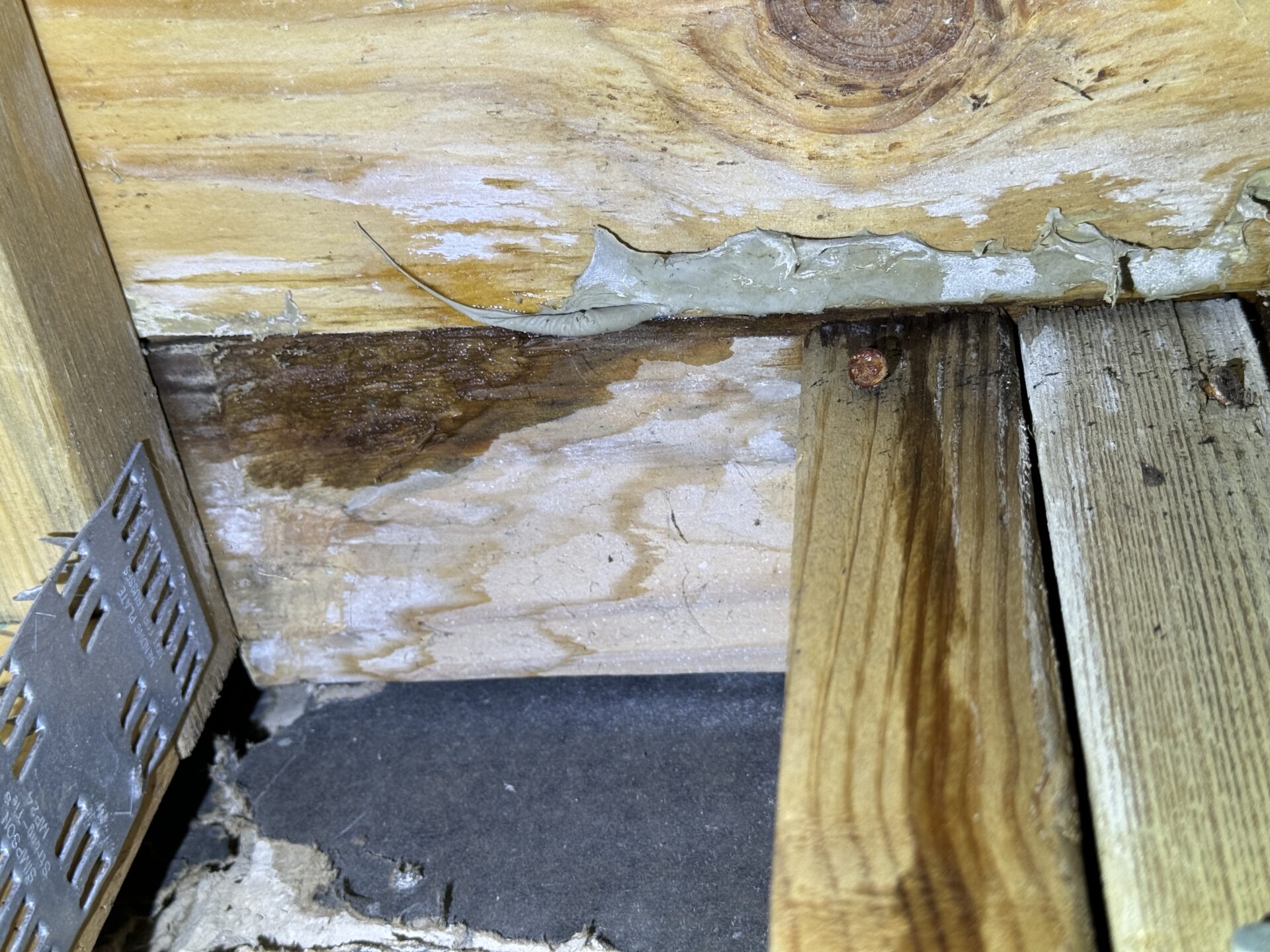
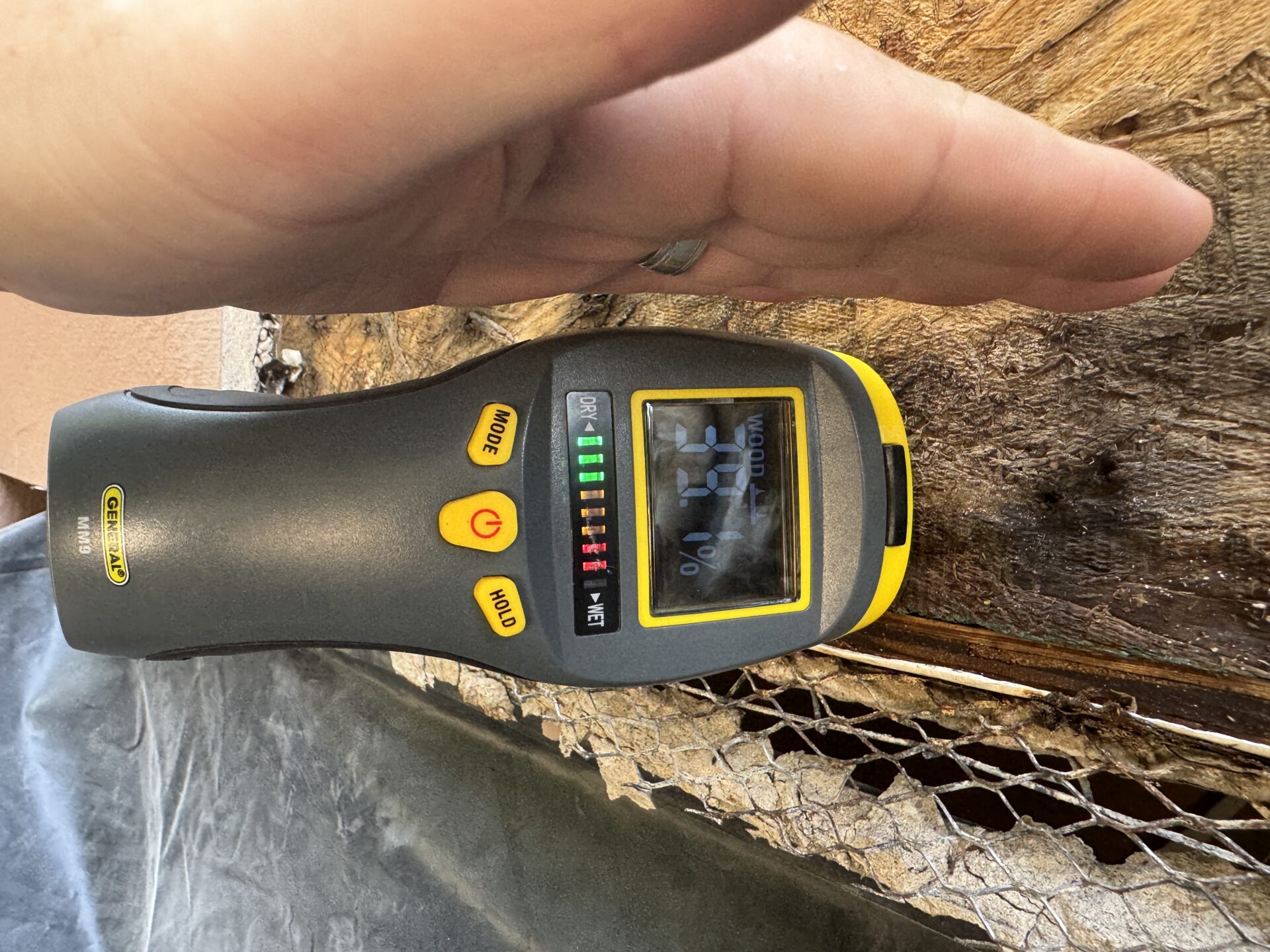
Destructive testing was used strategically to expose concealed components of the building envelope, including stucco assemblies, flashing conditions, weather resistant barriers, and underlying wood framing. This allowed the project team to directly observe how moisture was being managed, or mismanaged, within the wall and balcony systems.
Key Findings
The investigation identified numerous non‑compliant conditions within the stucco cladding system that affected moisture management and long‑term performance. Documented conditions included improper stucco attachment and embedment, non‑compliant flashing installations at balconies and wall interfaces, and inadequate integration of weather resistant barriers with weep and drainage components.
During destructive testing, Knott Laboratory observed moisture trapped behind the stucco cladding, along with elevated moisture levels in the underlying wood framing and sheathing. In several locations, this exposure was accompanied by visible deterioration of moisture sensitive materials. These findings demonstrated that water was bypassing intended drainage pathways and accumulating within the building envelope.
Interior observations further documented damage consistent with exterior envelope deficiencies, including moisture affected drywall and trim at window and wall locations.
Outcome
Knott Laboratory’s findings established that the exterior stucco and associated moisture management components were not performing as intended and contained multiple non‑compliant conditions. The investigation provided the condominium association and its legal team with clear, documented evidence of concealed moisture intrusion and resulting material deterioration.
This case underscores the importance of proper detailing, installation, and verification of building envelope systems and highlights the critical role of destructive testing in identifying conditions that cannot be confirmed through visual inspection alone.