When we think about threats to buildings and infrastructure, earthquakes and floods often come to mind. But there’s another hazard quietly reshaping our cities: land subsidence — the gradual sinking of the ground, often caused by changes in soil structure and groundwater depletion.
A recent study published in Nature Cities analyzed 28 major U.S. metropolitan areas and found that in most cities 65% of the land area is sinking, affecting an estimated 34 million residents. In some hotspots, subsidence exceeds 5 millimeters per year, putting thousands of structures at risk of damage from uneven settlement.
Why Soils Matter
Subsidence is closely tied to the relationship between soil composition and groundwater use. In regions with clay-rich or unconsolidated soils, removing groundwater reduces pore pressure, causing the soil to compact and the ground to sink.
A major reason for this is groundwater extraction, the researchers found, is rapidly growing cities demand more freshwater that must be drawn from aquifers.
This process doesn’t happen overnight—it’s gradual, but those changes build up over time magnifying weak spots. The impact will be seen in foundations, building envelope, and even structural integrity.
The Numbers
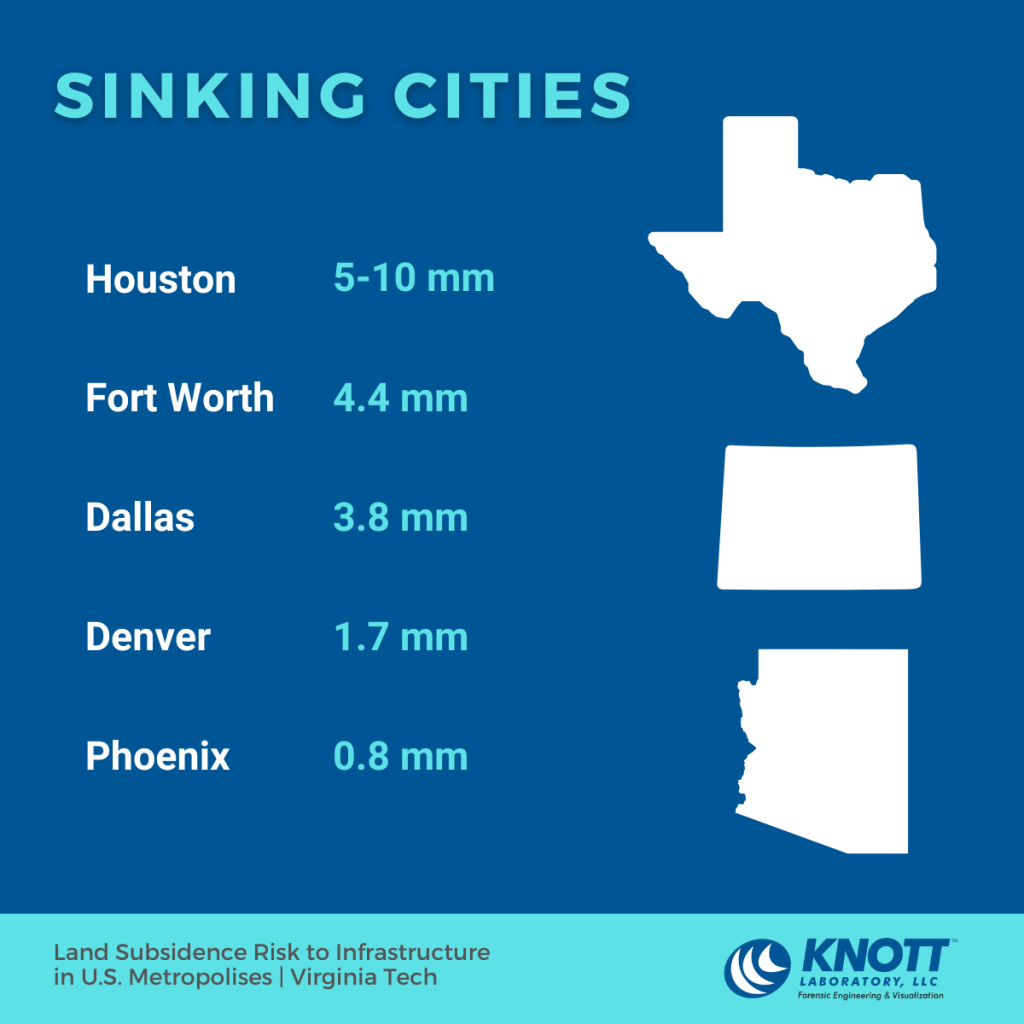
The study found the following average “vertical land motion” for these cities in our service area, measured in millimeters per year.
- Houston – 5 to 10mm
- Ft. Worth – 4.4mm
- Dallas – 3.8mm
- Denver – 1.7mm
- San Antonio – 1.1mm
- Phoenix – 0.8mm
- Austin – 0.8mm
What This Means for Property Owners
Subsidence, or sinking, isn’t just a geological curiosity—it’s a practical concern for anyone building or maintaining structures in these regions. Cracked walls, uneven floors, and compromised foundations are common symptoms. Left unchecked, these issues can escalate into major structural failures.
How We Can Help
Our team specializes in structural and civil engineering and foundation analysis to identify soil-related risks before they become costly problems. Whether you’re planning new construction or investigating damage, we provide:
- Soil and subsurface evaluations tailored to regional conditions.
- Foundation and drainage reviews to mitigate settlement risks.
- Foundation and building envelope inspections to evaluate, repair, and mitigate issues.
- Expert analysis for litigation and insurance cases involving subsidence and soil movement.
We’re here to help protect your investment. Contact our team if you have a concern you would like to discuss:
Justin Bayer – Colorado & Texas
Ginny Campbell – Colorado
Zach Miller – Arizona