What Is Digital Media Forensics?
Digital Media Forensics at Knott Laboratory applies scientific and engineering principles to analyze video, audio, images, and other digital evidence to determine what actually happened in an incident. The goal is to remove ambiguity, establish facts, and present findings in a way that is accurate, measurable, and understandable to non-technical audiences.
Digital media is everywhere, with body cameras, dashcams, surveillance video, and cell phones, but video evidence alone does not tell a complete or accurate story. Cameras don’t capture depth, distance, speed, or perspective accurately on their own. Knott Laboratory’s DMF process transforms raw media into reliable, court-ready evidence.
Why It Matters
- Clarifies complex or disputed events
- Provides measurable data (distance, timing, movement)
- Helps juries and decision-makers understand what video alone can’t show
- Adds scientific context to widely used digital footage
Basic Digital Media Forensics Process
- Case Review & Evidence Collection
Experts work with clients to identify relevant digital media (video, audio, photos, GPS, vehicle data). - Media Preparation
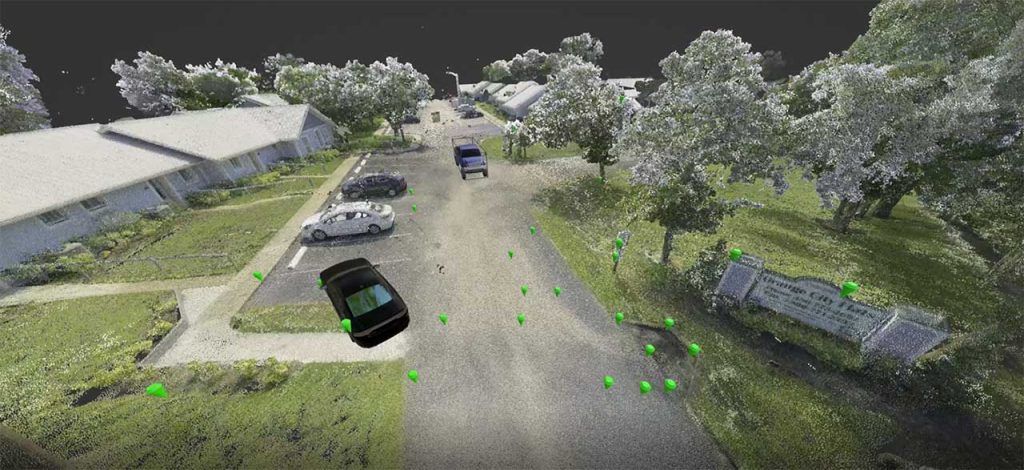
Footage and data are stabilized, documented, and prepared for analysis, including frame-by-frame review and metadata extraction. - 3D Alignment & Reconstruction
Digital media is aligned to real-world measurements using photogrammetry, 3D scanning, and camera calibration to correct perspective and distortion. - Analysis
Experts analyze movement, timing, distances, speed, and spatial relationships between people, vehicles, and objects. - Visualization & Reporting
Findings are presented through clear visualizations and written reports designed for courtrooms, investigations, and public understanding.
Types of Digital Evidence Analyzed
- Body-worn and dash cameras
- Surveillance and security video
- Cell phones and doorbell cameras
- Drone footage
- GPS and vehicle event data recorders
What Sets Knott Laboratory Apart
- Multidisciplinary team of engineers, visualization experts, and forensic professionals
- Focus on scientific accuracy, transparency, and defensibility
- Advanced 3D visualization that makes complex evidence easy to understand
- Trusted by law enforcement, attorneys, insurers, and investigators nationwide
Who Uses Digital Media Forensics?
- Law enforcement agencies
- Civil and criminal attorneys
- Insurance and risk professionals
- Accident reconstruction and safety experts
Case Studies
Case Visualizations
Knott Laboratory Subject Matter Expert Request
Contact: Elaine Matthews, 903-504-3020, [email protected]